

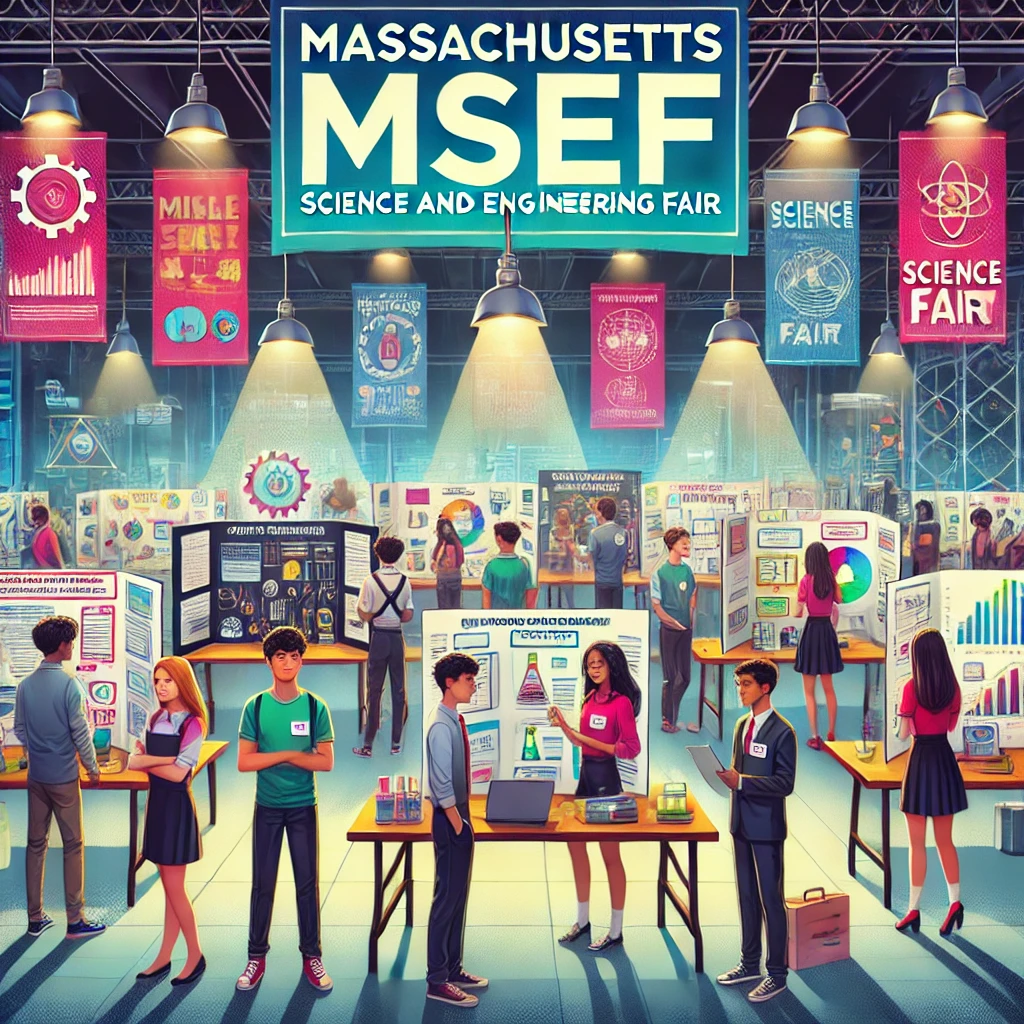
Here’s how to excel at the Massachusetts Science and Engineering Fair (MSEF) and showcase your research, with practical tips and strategies to help you stand out.
What Is the Massachusetts Science and Engineering Fair (MSEF)?
MSEF is an annual statewide competition for middle and high school students across Massachusetts to present their research and engineering projects. It exists to foster curiosity, innovation, and a love of science, giving students a platform to present their work and earn recognition.
Key Aspects of MSEF
- Categories: MSEF spans many categories, including life sciences, physical sciences, engineering, and social sciences. Students pick the one that best fits their research.
- Qualification: students qualify through their schools or local fairs, and exceptional projects are selected to compete at the state level.
- Presentation: participants present with display boards, oral presentations, and sometimes interactive demonstrations. Judges evaluate research quality, innovation, and presentation.
- Success stories: many MSEF participants have gone on to recognition at national and international competitions, including ISEF.
Categories at MSEF
MSEF offers a range of categories to explore:
- Life Sciences
- Botany: plant biology, physiology, and interactions with the environment.
- Zoology: animal biology, behavior, and ecosystems.
- Genetics: genetic variation, inheritance, and molecular biology.
- Physical Sciences
- Chemistry: chemical processes, reactions, and the composition of substances.
- Physics: the principles governing matter, energy, and their interactions.
- Astronomy: celestial phenomena, space science, and cosmic systems.
- Engineering
- Mechanical Engineering: designing and improving mechanical systems and devices.
- Electrical Engineering: developing and testing electronic systems, circuits, and devices.
- Environmental Engineering: solutions for environmental challenges, focused on sustainability.
- Social Sciences
- Psychology: human cognition, behavior, mental processes, and social interactions.
- Sociology: the structures and dynamics of societies and human interactions.
- Economics: economic systems, trends, behaviors, and impacts.
Tips for Success at MSEF
Winning at MSEF takes both a well-executed project and a compelling presentation. Some tips:
- Start early: begin your research as soon as you can to allow time for experimentation, data collection, analysis, and refinement.
- Choose the right category: pick one that fits your project’s strengths, and check the guidelines for any updates.
- Understand the judging criteria: tailor your project to scientific accuracy, creativity, and presentation quality.
- Practice your presentation: rehearse so you can explain your research clearly and field questions confidently.
- Originality counts: aim for a unique research question or approach.
- Real-world relevance: show the practical applications of your work.
- Ensure feasibility: keep your project achievable within your timeframe and resources.
Mastering the Research Process
MSEF values a thorough, methodical approach. Follow these steps to keep your project on track:
- Identify a research question: pick a topic that intrigues you and form a clear, testable question.
- Conduct a literature review: gather existing information to build a solid foundation.
- Develop a hypothesis: form one you can test through experimentation or data collection.
- Experiment / collect data: run experiments or gather data to test your hypothesis.
- Analyze results: use appropriate methods to draw meaningful conclusions.
- Conclude and reflect: summarize your findings, discuss their implications, and consider next steps.
Presentation Tips
Your presentation is how you communicate your research. To make it land:
- Create an engaging display: a clear, organized, visually strong board with high-quality graphs, charts, and images.
- Polish your oral presentation: practice speaking confidently. How well you explain your work and engage judges matters a lot.
- Show enthusiasm: your passion for the topic leaves a lasting impression.
For the official rules, registration details, and the current year’s schedule, see the Massachusetts Science & Engineering Fair website.
The Fair plays an important role in the lives and future careers of many students as they learn the critical thinking skills necessary to thrive in any field.
Qualifying for National Competitions
Top projects at MSEF may advance to national and international competitions, including ISEF. To qualify, you should:
- Meet the eligibility criteria: confirm you’re eligible based on grade level and project requirements.
- Follow the competition rules: adhere to all rules and guidelines, including ethical standards and safety protocols.
- Prepare for the next level: refine your project based on feedback and be ready to present at a higher level.
Resources for Success
If you’re inspired by past winners, consider finding a mentor or enrolling in science fair coaching. Many students who’ve done so have gone on to win at ISEF.

The key to success is passion, preparation, and perseverance. Good luck to all aspiring MSEF participants!
To get in touch with past science fair winners, you can book calls with past winners via Sciencefair.io, or join Sciencefair.io’s A-Z Masterclass.


Leave a Reply