

The simple breakdown you need.

The California Science and Engineering Fair (CSEF) is one of the most prestigious science competitions in the state, drawing hundreds of California’s brightest students. Winning at CSEF opens doors to scholarships and recognition, and it’s a stepping stone to national and international competitions like the Regeneron International Science and Engineering Fair (ISEF). Here’s how to build a winning project, step by step.
Step 1: Choosing the Right Project Idea
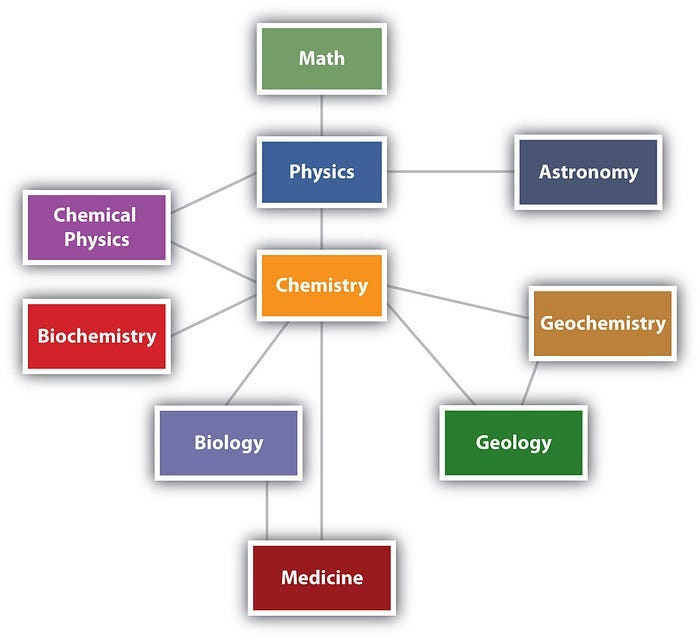
Start with a problem or question that genuinely interests you. Passion for the topic is what keeps you going through months of research. Judges look for projects that are original, relevant, and scientifically rigorous, so aim for all three.
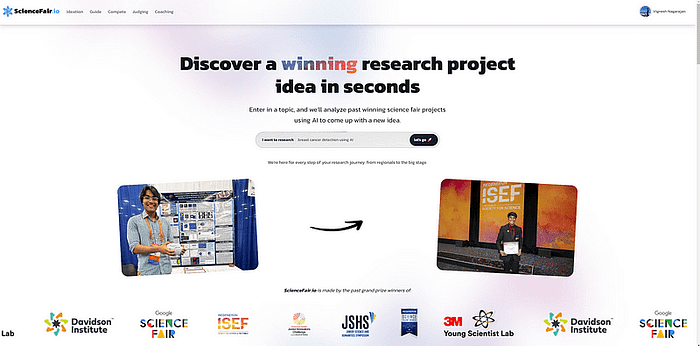
Need help brainstorming? ScienceFair.io has an Ideation Engine that helps you find a project idea that’s both meaningful and feasible, whether you’re starting from scratch or refining a concept.
Step 2: Conducting Thorough Research
Once you’ve chosen a topic, dig deep. Use academic journals, credible websites, and interviews with experts. The more you understand your subject, the better you can design your experiment and anticipate problems before they happen.
If you want structured help getting to ISEF, consider sciencefair.io’s A-Z Science Fair Program. It offers:
- Personalized mentorship: one-on-one guidance from experienced mentors across scientific fields.
- Structured support: step-by-step help from ideation to completion.
- Resource access: tools, materials, and networks used by previous ISEF winners.
- Competition prep: specific strategies for impressing judges.
Step 3: Designing and Conducting Your Experiment
A solid experiment is methodical, with clear variables and controls. Document everything, from your hypothesis to your final results. Good records help you during your presentation and show judges how thorough you were.
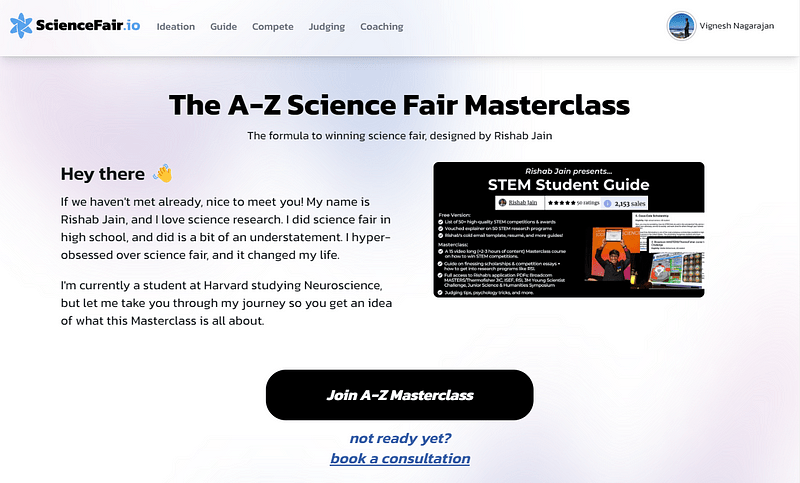
To sharpen your experimental design, the A-Z Science Fair Masterclass covers every stage of preparation, from forming a hypothesis to analyzing data.
Step 4: Analyzing Data and Drawing Conclusions
When the experiment is done, analyze your data. Use statistical methods so your conclusions are actually supported by the numbers. Be honest about what you find, even if it contradicts your hypothesis. Judges value integrity and a genuine grasp of the scientific process.
Need help with analysis or finding the right mentor? The right mentor can make a real difference. See this guide to finding your science fair mentor, and watch how Rishab found his below.
Step 5: Crafting an Impressive Presentation
Your presentation is where it all comes together. Build a clear, visually strong display board that walks through your research process, findings, and conclusions. Then practice your talk until you can discuss the project confidently and field any question a judge throws at you.
For more, watch this video by Rishab Jain on how to make a winning ISEF poster.
Final Tips for Success
Winning CSEF is about more than a good project. It’s about showing a deep understanding of your subject, thinking critically, and presenting your findings clearly. Start early, ask for feedback, and revise your work as you learn more.
If you’re aiming for the very top, ScienceFair.io has resources built to help you succeed at CSEF and at Regeneron ISEF.
Follow these steps, use the resources available, and you’ll be well on your way to standing out at the California Science and Engineering Fair. Good luck!


Leave a Reply