

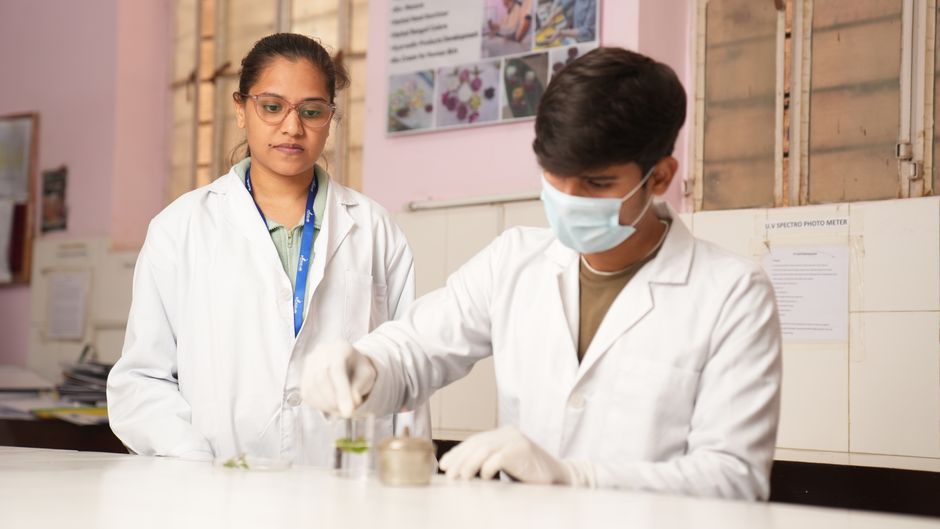
If you’re a high schooler hoping to pursue neuroscience, competitions are a great way to show your passion for medicine. They connect you with like-minded students, and winning a prestigious one boosts your college applications. Here are ten neuroscience competitions for high school students, with overviews, key dates, and eligibility. Dates and details change each cycle, so confirm the current information with each.
Bonus online competition: check out the International Research Olympiad (IRO), the premier competition for high school researchers. Since research is such a key part of the pre-med path, showing aptitude here reflects well on your applications to top pre-med schools.
1. International Brain Bee
- About: first held in 1998, the International Brain Bee is one of the world’s premier neuroscience competitions, created to raise awareness of brain disorders and spark interest in neuroscience. It has three tiers: students win their local Brain Bee, advance to their National Brain Bee, and each country sends one representative to the international competition. It consists of oral and written exams on neuroscience.
- Eligibility: high school students aged 13-19.
- Awards: up to $3,000 in cash prizes.
- Dates: regional and national competitions usually run January to May; the international competition is in July.
- Cost: free.
2. American Academy of Neurology Neuroscience Research Prize
- About: the American Academy of Neurology’s Neuroscience Research Prize encourages high school students to explore neuroscience through original research. Submissions are judged by physicians and scientists on relevance to neuroscience, creativity, data interpretation, and report quality.
- Eligibility: grades 9-12 in the U.S.
- Awards: a $1,000 prize and an all-expenses-paid trip to present at the AAN annual meeting.
- Dates: the application period runs June to November.
- Cost: free.
3. International Psychology Olympiad (IPsyO)
- About: the IPsyO is an international pre-college competition covering behavioral science and neuroscience. It’s team-based, so individuals can’t register directly; you need an affiliated teacher sponsor. The exam covers applying concepts, analyzing research scenarios, and experimental design.
- Eligibility: high school students worldwide.
- Awards: gold, silver, and bronze medals based on aggregate scores.
- Dates: registration closes in July; the competition runs over two days in August.
- Cost: free.
4. US Medicine & Disease Olympiad (USMDO)
- About: the USMDO is a newer competition with a single online exam. Like the USABO, it feeds into an international-level competition. The exam focuses on three areas of medicine-related biology: cell biology and genetics, human physiology, and human disease.
- Eligibility: all U.S. high school students.
- Awards: finalist recognition (top 20); the top 8 scorers advance to the International Medicine & Disease Olympiad.
- Dates: the annual exam takes place around July.
- Cost: $10 fee.
5. USA Biology Olympiad (USABO)
- About: one of the oldest and most prestigious biology competitions in the US, the USABO feeds into the International Biology Olympiad (IBO). It has two main exams, the Open Exam and the semifinal exam, covering all of biology, including cell biology, plant and animal anatomy and physiology, and biosystematics, with both theoretical and practical questions.
- Eligibility: U.S. citizens and permanent residents in grades 9-12.
- Awards: distinctions at each level. Strong performers on the Open Exam become semifinalists; the top 20 on the semifinal exam are invited to a training camp, and 4 are chosen to represent the US at the IBO.
- Dates: the Open Exam is in early February and the semifinal exam in March. Registration opens in August and closes in November.
- Cost: free.
6. HOSA Future Health Professionals
- About: recognized by the U.S. Department of Education and the Department of Health and Human Services, HOSA is a national competition with events at various levels. Students in HOSA chapters compete in one of several event categories: health science, health professions, emergency preparedness, leadership, recognition, and teamwork.
- Eligibility: HOSA members (via a local/school chapter) in middle school, high school, or a postsecondary institution.
- Awards: various awards at different levels.
- Dates: the season spans the academic year, from November to the International Leadership Conference in June.
- Cost: varies; club fees may apply.
7. International Science and Engineering Fair (ISEF)
- About: sponsored by Society for Science, Regeneron ISEF is the world’s premier pre-college STEM competition. Students qualify by winning affiliated science fairs in their region, then prepare a project, enter one of 22 categories, and pitch to judges.
- Eligibility: grades 9-12 or equivalent.
- Awards: scholarships and prizes, with top awards up to $75,000.
- Dates: regional and state fairs have varying deadlines. Check the Society for Science site to find your affiliated fair.
- Cost: fair fees vary; some fairs reimburse expenses.
8. Junior Science and Humanities Symposium (JSHS)
- About: like ISEF, the JSHS is a prestigious high school STEM competition. Sponsored by the Department of Defense, it has regional and national symposia where students compete for scholarships, advancing from regionals to nationals.
- Eligibility: U.S. high school students in grades 9-12.
- Awards: scholarships of up to $12,000.
- Dates: symposia usually occur in the second half of the U.S. academic year.
- Cost: free.
9. Vision Global Health (Harvard Global Health & Leadership Conference)
- About: hosted by the Harvard Global Health and Leadership Conference, the Vision Global Health competition fosters interest in global health and develops leadership skills. Participants create proposals to solve health issues, write reports, and present at a conference, often held in a hybrid format. (Search for the conference’s current official site for details.)
- Eligibility: high school students.
- Dates: held annually; check the current year’s schedule.
- Cost: free.
10. Regeneron Science Talent Search (STS)
- About: also sponsored by Society for Science, Regeneron STS is one of the most prestigious STEM awards in the US. Thousands of students submit research projects each year, and 40 become finalists. The application is lengthy, including essays, research materials, and letters of recommendation.
- Eligibility: U.S.-based high school seniors.
- Awards: cash prizes up to $250,000. Finalists are invited to Washington, D.C. to present their research.
- Dates: the deadline falls around November each year.
- Cost: free.
Concluding Remarks
Neuroscience competitions offer a wealth of benefits: prestigious recognition, supportive communities, and deeper knowledge. As a high schooler, winning one is a strong way to demonstrate your passion for medicine and add substance to your college applications.
Don’t stop at these ten, though. Check out 50+ more STEM opportunities in this comprehensive guide. Competitions look great on applications, and they also offer real experience and room to grow. Best of luck.
Image Credit: York University


Leave a Reply