

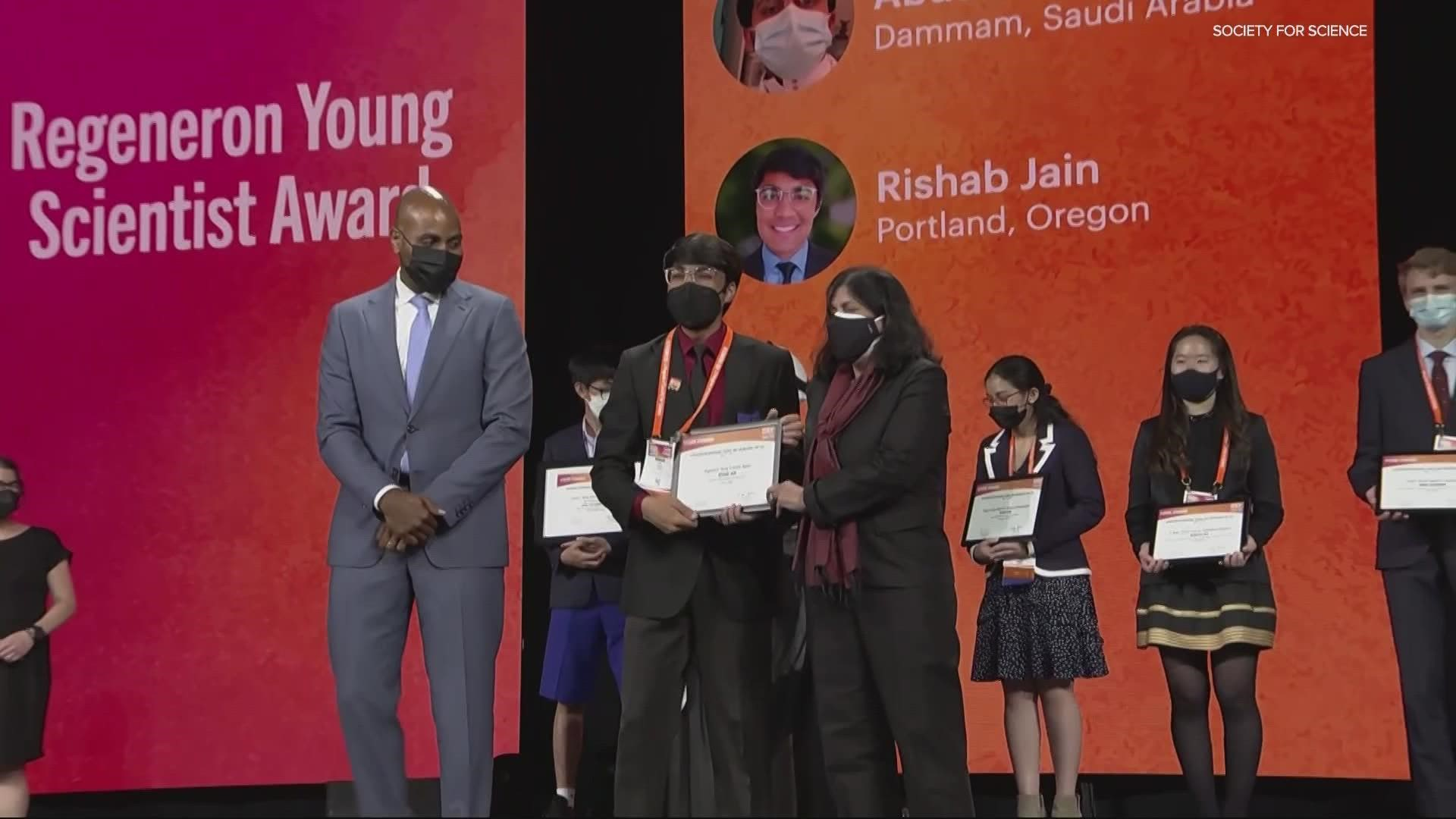
The International Science and Engineering Fair (ISEF) is where the strongest young scientists and engineers in the world present their work. Here’s a closer look at five standout winning projects from recent years.
What is ISEF?
The International Science and Engineering Fair (ISEF) is the top pre-college science competition, drawing thousands of students from over 80 countries. Students present advanced research across many disciplines, competing for scholarships, internships, and grand awards, and connect with experts and each other along the way.
Getting there is a long road: it starts at local and regional fairs, advances through state or national competitions, and the top projects reach ISEF. Along the way you build research, problem-solving, and presentation skills, and a win carries real weight on a college application.
Why do science research?
Research teaches you to ask good questions and think critically, and it lets you go deep on something you actually care about. You’re not just learning what’s already known. You’re adding to it, which is exactly what colleges and competitions want to see.
1. Synthetic DNA Engineering With ICOR
Rishab Jain‘s project is in synthetic biology, focused on improving protein production in E. coli for vaccine development. The core is codon optimization, choosing the best DNA sequences to boost protein synthesis. Standard methods often ignore cellular dynamics, which causes inefficiencies. Jain built ICOR, a tool using a recurrent neural network (RNN) with a bidirectional LSTM architecture, trained on high-expression E. coli genes. It optimizes DNA sequences to fit the cellular environment better, and testing against standard methods showed clear gains in protein-expression efficiency, with broad implications for biotech and vaccine development.
Award: Regeneron Young Scientist Award (top 3, $50,000) at ISEF 2022
Category: Biomedical Engineering (ENBM)
To hear more about Rishab’s work and how he did it, check out his YouTube videos on getting started in science research.
2. Neurobiology of Suicide: Claudin-5 Is a Biomarker
Natasha Kulviwat‘s study looks for biological markers of suicide by examining the breakdown of claudin-5, a key part of the blood-brain barrier (BBB), in postmortem brain tissue. She found claudin-5 and the cytokines IL-6 and IL-8 elevated in people who had died by suicide, suggesting a link between BBB disruption and suicide. The study also looked at stressful life events, where claudin-5 sits in the brain, and gene expression tied to neuroinflammation, and used molecular docking to test how current medications interact with claudin-5. The work points to claudin-5 as a possible biomarker for suicide risk and a new direction for treatment.
Award: Gordon E. Moore Award ($50,000) at ISEF 2023
Category: Biomedical and Health Sciences
“Every forty seconds, suicide steals a life, yet no biomarkers exist for suicide.”
Natasha Kulviwat
3. The Inchworm Robot with Skateboard
Yuyang Wang‘s project builds bionic robots modeled on how caterpillars and inchworms move, designed to navigate risky environments like power grids and cable systems. Across four generations, the robots went from basic wire-pulling and friction control to bending navigation, obstacle avoidance, and traversing multiple pipes at once, with the latest model switching between grabbing and wheel modes. They show real promise for grid maintenance and breakage detection.
Award: Craig R. Barrett Award for Innovation ($10,000) at ISEF 2023
Category: Engineering Technology: Statics and Dynamics
4. BIO-PLEX: An Innovative Biocomputational Approach
In 2022, as the world was still dealing with COVID-19, mpox emerged as a new threat, with around 30,000 cases in a short span. That raised urgent questions about what made the virus more infectious and whether it would affect drug efficacy. Saathvik Kannan built BIO-PLEX, a computational tool to study the virus’s structure and mutations. It showed how two changes in the virus’s DNA-copying protein might make mpox spread more easily and affect how well treatments work, a clear example of how computation can speed up disease research.
Award: Regeneron Young Scientist Award ($50,000) at ISEF 2023
Category: Computational Biology and Bioinformatics (CBIO)
5. Self-Supervised 3D Human Motion Reconstruction
Michelle Hua‘s project reconstructs 3D human shape and motion from a single video, addressing methods that need huge training datasets and still struggle. Her approach, a geometric consistency-based self-supervised neural network (GC-SSN), uses joints and silhouettes from video frames and enforces consistent alignment between the 3D models and those features, reaching high accuracy with no manual annotation or ground-truth data. It outperformed existing algorithms, with applications in 3D broadcasting, VR, sports analysis, and telepresence.
Award: First place: George D. Yancopoulos Innovator Award ($75,000) at ISEF 2021
Category: Robotics and Intelligent Machines (ROBO)
Taking your own project further
These projects show what’s possible when students take on real problems, and you can do it too. If you want to take your project further but aren’t sure where to start, take a look at Rishab’s free STEM Student Guide. It’s practical advice for taking a science fair project all the way to the international level, covering how to plan and run your research, present it well, and find good opportunities in STEM.
Cover image: ISEF top winners at ISEF 2022, Rishab Jain on the left.


Leave a Reply