

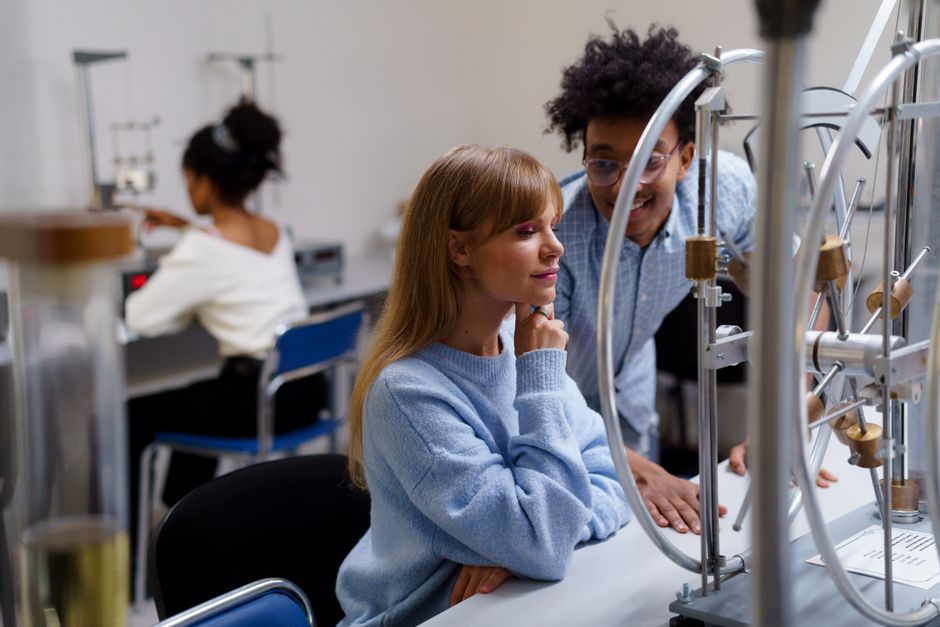
For high school students interested in research, there are programs and competitions that offer real experience, mentorship, and a chance to contribute to serious work. They help you stand out on college applications and prepare you for what comes next. Here are ten of the top research opportunities to consider. Dates and eligibility change year to year, so confirm the current details with each.
1. Research Science Institute (RSI)
Hosted by the Center for Excellence in Education (CEE) and MIT, RSI is an intensive six-week summer program combining lectures from leading scientists with hands-on research under experienced mentors, ending in a final presentation. It spans biology, chemistry, computer science, and more. Open to high school juniors worldwide, admission is extremely competitive, and the program is free, including travel and accommodation. RSI is one of the most prestigious high school research programs anywhere.
2. Stanford Institutes of Medicine Summer Research Program (SIMR)
SIMR is a Stanford summer program where high schoolers do biomedical research under faculty in fields like immunology, neuroscience, and stem cell biology, with mentorship and a final presentation. It’s open to US juniors and seniors, with priority for Bay Area students, and participants receive a stipend. It’s a strong stepping stone for students aiming at medicine or biomedical research.
3. MIT MOSTEC (MIT Online Science, Technology, and Engineering Community)
MOSTEC is a six-month online program with a week-long summer conference at MIT. Students take online coursework, complete a research project with mentorship, and present their work. It’s open to rising high school seniors in the US and Puerto Rico, with a focus on students underrepresented in STEM, and it connects participants directly to MIT faculty and alumni.
4. Garcia Summer Scholars Program
The Garcia program at Stony Brook University is an intensive summer research experience in polymer science and engineering. Students work in labs on ongoing projects, building skills in experimental design, data analysis, and scientific presentation. It’s open to high school juniors and seniors and is well regarded in materials science.
5. NASA High School Internship Program
NASA offers high school internships at its centers, where students work with NASA scientists and engineers on projects in space exploration, planetary science, and engineering. It’s open to US students aged 16 and up, with a minimum GPA that varies by center, and interns receive a stipend based on hours worked.
6. Simons Summer Research Program
Hosted by Stony Brook University, the Simons program has high school juniors work with university faculty on an independent research project in fields like mathematics, physics, and biomedicine, ending in a final presentation. It’s open to US juniors and is known for a rigorous research experience that colleges respect.
7. NIH High School Summer Internship Program (HS-SIP)
The NIH HS-SIP places high school students in NIH laboratories, where they assist researchers and build skills in lab techniques, data analysis, and experimental design, alongside seminars and workshops. It’s open to US juniors and seniors aged 17 and up, and participants receive a stipend.
8. HSHSP (High School Honors Science, Math, and Engineering Program)
Hosted by Michigan State University, HSHSP has motivated high schoolers do research in science, math, and engineering under a faculty mentor, with discussions and presentations that build scientific communication skills. It’s open to high school juniors and is one of the oldest research programs of its kind in the US.
9. Jackson Laboratory Summer Student Program
The Jackson Laboratory program is a hands-on research experience in genetics and genomics. Students work in JAX labs under experienced scientists on projects in areas like cancer, aging, and genomics, with seminars, workshops, and a final presentation. It’s open to high school juniors and seniors interested in biomedical research, and participants receive a stipend.
10. International Research Olympiad (IRO)
The IRO is an interdisciplinary research competition that asks high school students to apply scientific reasoning to real-world problems. Participants advance through rounds covering research analysis, data interpretation, and inquiry-based problem-solving, with the finals featuring presentations. It’s open to students aged 13-18 worldwide, and top competitors receive medals and recognition.
ScienceFair.io
Working on a science fair project? ScienceFair.io is a platform for high and middle school students that helps with the whole process, from brainstorming an idea to presenting your final work.
Schedule a consultation call to talk with the team and put together a plan that fits your goals.
What it offers:
- AI Discovery Engine: generate research ideas based on thousands of past projects.
- Step-by-step research guide: work through the research process with clear steps.
- Tuner features: refine your project title and abstract so the work stands out to judges.
- AI judging tool: practice with simulated Q&A sessions to find and fix weak spots.
- Compete page: region-specific guidance for the International Science & Engineering Fair (ISEF).
- Expert coaching: mentorship from past winners through the A-Z Science Fair Masterclass and coaching calls.
Explore the tools at ScienceFair.io to get started.


Leave a Reply