

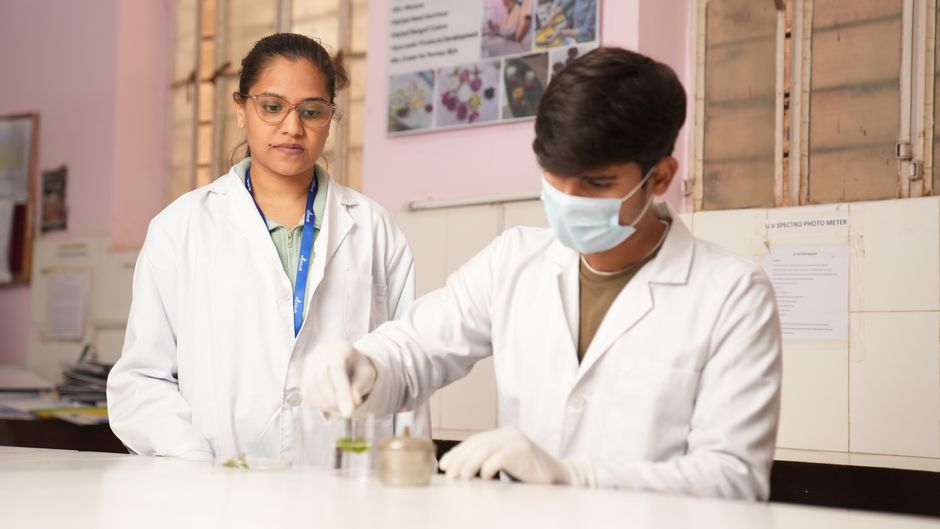
Explore top medical and health competitions for high school students, with helpful guides throughout this post. They’re a great way to build your knowledge and show your passion for the field.
HOSA-Future Health Professionals
HOSA is a giant in health-career competitions. This international organization offers many events testing skills in everything from medical assisting to patient care.
Eligibility
- Membership and registration: participants must be registered HOSA members by the specified deadlines.
- Competition affiliation: competitors must be affiliated with HOSA-Future Health Professionals before their chartered association’s leadership conference.
- Chartered association deadlines: deadlines set by chartered associations must be met for eligibility.
- Event registration: registration for the International Leadership Conference (ILC) must be completed by May 15th.
- Previous participation: participants must have competed at the state level in the same event before the ILC.
- Event maximums: participants can enter one regular event at the ILC and may take part in multiple recognition category events.
- Membership standing: competitors must be active HOSA members in good standing.
Award
Regional, national, and international competitions with scholarships and recognition.
International Brain Bee
The International Brain Bee is a neuroscience competition that motivates high school students worldwide to learn more about the brain. Participants face a written test and an oral quiz covering brain anatomy, neural pathways, neurological disorders, and neuroscience research.
Eligibility
- National Brain Bee: students compete in their National Brain Bee to qualify for the IBB World Championship. Find local chapters on the IBB website and register there.
- Age: typically open to high school students aged 13 to 19, with potential additional criteria such as high school enrollment.
- Preparation: registered participants prepare for the written and oral exams using the provided study materials.
- Non-participating countries: students from countries without a chapter can try contacting nearby chapters, though acceptance isn’t guaranteed, or follow the IBB’s steps to start a National Brain Bee.
- Other ways to get involved: even if ineligible by age, students can volunteer, mentor, spread awareness, attend events, or donate.
Award
International-level competition and recognition, with prize money ranging from $1,000 to $3,000 (in 2023).
US Medicine & Disease Olympiad (USMDO)
The US Medicine and Disease Olympiad assesses students’ understanding of human biology, medicine, health, and disease through a two-hour multiple-choice exam, usually held around late July. It covers cell biology and genetics, human physiology, and human disease, and attracts hundreds of participants each year.
Eligibility
- Open to all high school students interested in human biology, medicine, health, and disease.
- A good opportunity for those considering careers in medicine and healthcare.
Award
- Top performers receive gold medals.
- USMDO is the pathway to the International Medicine and Disease Olympiad (IMDO), where gold medalists represent the United States.
- Participants gain recognition, networking with peers and professionals, and a notable addition to their academic record. Achievements may also lead to scholarships.
National Science Bowl
The National Science Bowl (NSB) is a prominent nationwide competition at the high school and middle school levels. Using a quiz bowl format, students answer questions across scientific disciplines. Teams of four students plus an alternate are guided by a teacher advisor. Started by the U.S. Department of Energy in 1991, the NSB has reached over 344,000 participants and is one of the nation’s largest science competitions.
Eligibility
- All high school students in the USA can participate.
Award
- The top two middle and high school teams in the National Finals receive $5,000 each for their schools’ math and science departments.
- Teams placing in the top 16 each win $1,000 for their schools’ science departments.
International BioGENEius Challenge
The BioGENEius Challenge is a leading global high school science competition focused on original research in biotechnology. Participants present projects that reflect advanced scientific work and a strong grasp of biotechnology.
Eligibility
- High school students from around the world.
- A keen interest in biotechnology, biology, and related fields, whether genetic engineering, drug discovery, or bioinformatics.
Awards
- Gold, Silver, and Bronze Medals for outstanding biotechnology research.
- Scholarships for some winners to further their education in science or related fields.
- Networking with industry professionals, researchers, and fellow students, plus visibility from presenting at events like the BIO International Convention.
High School Design Competition (HSDC) by Engineering World Health (EWH)
EWH’s High School Design Competition (HSDC) is a self-directed challenge in which students explore low-resource engineering and design solutions that improve healthcare delivery in under-resourced parts of the world. You can enter individually or in groups of up to 6 students.
Eligibility
- Must be a high school student.
- Groups of up to 6 students are allowed.
- Entry requires permission from an adult guardian.
- An entry fee of $20 USD per student applies (fee waivers may be available on request).
Awards
- Winners receive recognition and the chance to make a real impact on global healthcare. Specific award details are announced with each cycle.
Siemens Competition in Math, Science & Technology (discontinued)
The Siemens Competition encouraged research in the natural sciences, mathematics, engineering, and technology, giving high school students the chance to do original research. Note that the Siemens Foundation discontinued the competition after its 2017 cycle, so it’s no longer running. It’s included here for reference, since you may still see it mentioned in older guides.
Eligibility (historical)
- It was open to U.S. citizens or permanent residents in high school, in good standing.
Award (historical)
- Scholarships ranged from $1,000 to $100,000.
eCYBERMISSION
eCYBERMISSION is a national online competition inviting students in grades 6 to 9 to use their STEM skills to address community problems. Teams of two to four, led by an adult Team Advisor, work on problem-solving that fosters teamwork, self-discovery, and real-world STEM applications.
Eligibility
- Open to students in grades 6 to 9.
- Teams of two to four, led by an adult Team Advisor.
Awards
- State awards: first-place state winners receive a $500 U.S. Series EE Savings Bond ($1,000 at maturity) per student; second-place winners a $250 bond ($500 at maturity); honorable mentions receive a certificate.
- Regional awards: regional finalists receive a savings bond at the state-award value plus $500 ($1,000 at maturity); regional winners receive a bond at the cumulative value plus $1,000 ($2,000 at maturity), plus an all-expenses-paid trip to the National Judging & Educational Event.
- National awards: national winners receive a savings bond at the cumulative value plus $3,000 ($6,000 at maturity).
Biomedical Debate
Biomedical Debate, a HOSA competitive event, focuses on biomedical ethics and policy, with students engaging in structured, thought-provoking debates.
Eligibility
- High school students interested in bioethics.
Award
- Recognition and a chance to engage in ethical discussions in the medical field.
More STEM competitions
Rishab Jain, who won at ISEF, has succeeded in numerous research competitions and completed several research projects during high school. His free Student STEM guide lists 50+ opportunities and competitions.


Leave a Reply