

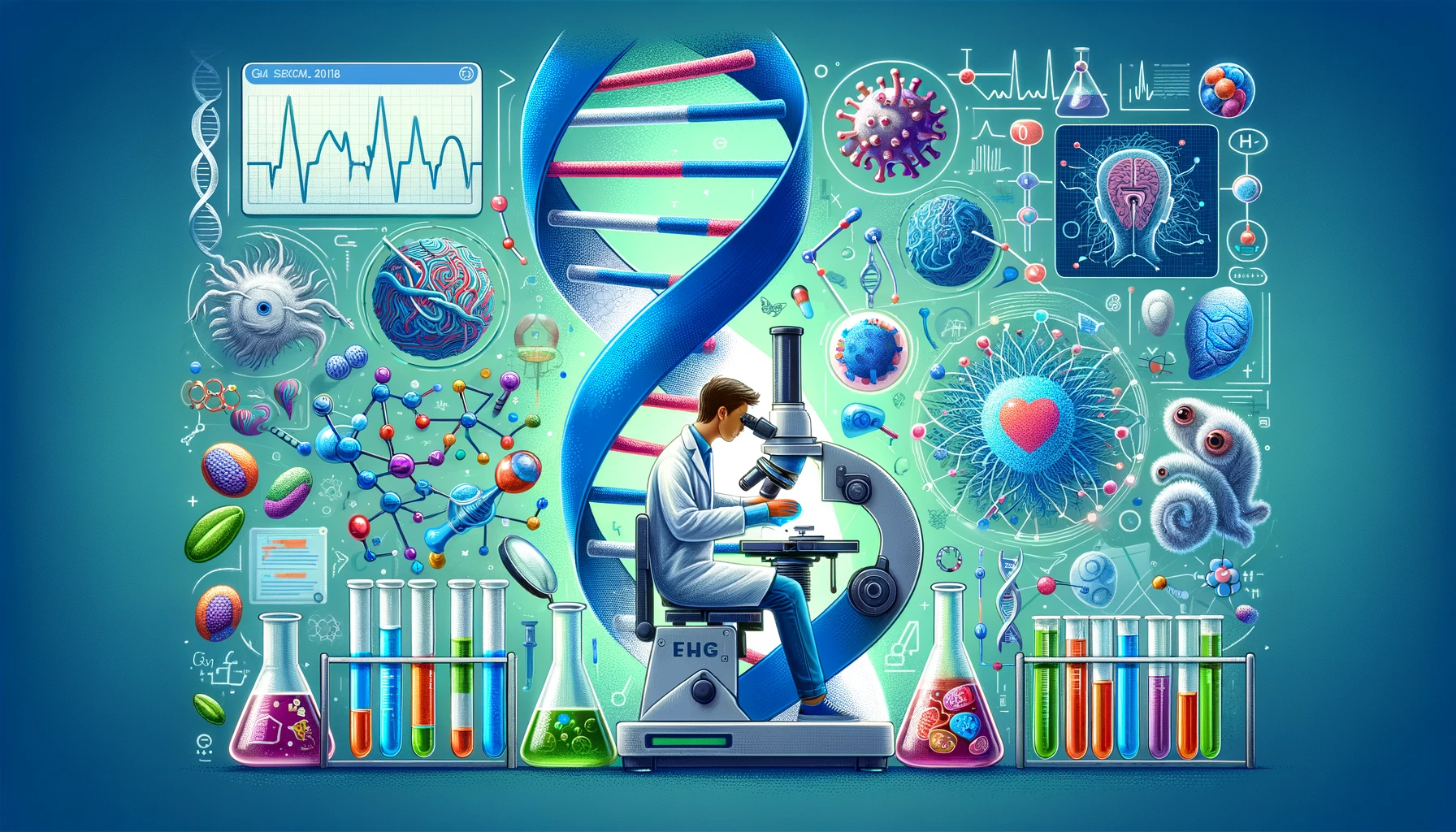
Medicine is a huge field, which makes it a great place to start if you want to do high school research. The hard part is usually narrowing down to a focused question. Below are ten medical research directions that are active right now and realistic to explore as a student, from gene editing to bioethics. Use them as starting points, then zero in on one specific question you can actually investigate.
Why science research?
Research teaches you to ask sharp questions and work toward real answers, a skill that pays off long after high school. It also lets you go deep on something you genuinely care about instead of just covering it in class. And done well, a real project shows colleges a kind of initiative that grades alone can’t.
Rishab Jain, a Harvard student and winner of ISEF, RSI, Coca-Cola Scholars, and Presidential Scholars, has made his STEM Student Guide public, with a list of 50+ more opportunities and competitions. It’s a good next stop if you want vetted, top-quality programs in one place.
TOP 10 Medicine Research Ideas
1. Stem Cell Therapy for Neurological Disorders
Stem cells are being tested as treatments for conditions like Parkinson’s and Alzheimer’s. You could look into how stem cells differentiate, how they might replace damaged neurons, and what their long-term effects are. Reviewing published clinical trials is a realistic way to assess how well these treatments actually work, alongside the ethical questions that come with regenerative medicine.
2. The Role of Genetics in Personalized Medicine
Personalized medicine tailors treatment to a person’s genetic profile. You could investigate how genetic testing flags a higher risk for diseases like cancer or diabetes, and how that changes a treatment plan, from targeted drugs to earlier screening. It also opens up real ethical questions around privacy and genetic discrimination.
3. Telemedicine and Digital Health
Telemedicine lets patients consult doctors remotely, and it grew fast after COVID-19. You could study where it works well, where it falls short, and how it affects access to care in rural areas. Health apps and wearables are a related angle: how accurate are they, and do they actually change people’s habits?
4. Microbiome Research and Its Impact on Health
The gut microbiome, the community of bacteria living in and on your body, is linked to obesity, autoimmune conditions, and even mental health. You could explore how diet and probiotics shift that balance, and what the research does and doesn’t yet support. A careful literature review here is very doable without a lab.
5. AI in Medical Diagnostics
AI is now used to read medical images like CT and MRI scans and to spot patterns in genetic data. You could look at how well these models perform against human doctors, where they fail, and the bias and privacy problems that come with training on patient data. This is a strong fit if you also code.
6. Gene Editing Techniques and Their Applications
CRISPR-Cas9 lets researchers edit DNA directly, with potential treatments for genetic diseases like cystic fibrosis and sickle cell anemia. You could study how the technique works, which treatments are already in trials, and the serious ethical debate around editing human genes, especially heritable ones.
7. Bioethics in Medical Research
Medical research runs on hard ethical calls: animal testing, how clinical trials are run, informed consent, and genetic modification. You could examine how institutional review boards (IRBs) protect participants, or take one real case and work through the trade-offs. This is a strong option if you prefer writing and argument to lab work.
8. Immunotherapy in Cancer Treatment
Immunotherapy uses the patient’s own immune system to attack cancer. You could compare approaches like checkpoint inhibitors and CAR-T cell therapy, look at which cancers they work on, and weigh their cost and side effects. The steady stream of new approvals means there are plenty of current sources to work from.
9. Neuroplasticity and Rehabilitation
Neuroplasticity is the brain’s ability to rewire itself, which matters for recovery after a stroke or traumatic brain injury. You could study how therapies like cognitive and physical rehab put it to use, how new neural pathways form, and how lasting the gains turn out to be.
10. Environmental Health and its Impact on Public Health
Pollution, climate change, and toxic exposure all shape health outcomes. You could investigate how a specific pollutant affects a particular community, or evaluate a policy meant to reduce it. Public health data is often freely available, which makes this realistic to research without lab access.
Bonus: Synthetic DNA Engineering With ICOR
Rishab Jain‘s project works in synthetic biology, improving protein production in E. coli, which matters for vaccine development. The core idea is codon optimization: choosing the DNA sequences that get a cell to produce the most protein. Standard methods often ignore how the cell actually behaves, which makes them inefficient. Jain built ICOR, a tool that uses a recurrent neural network (RNN) with a bidirectional long short-term memory (LSTM) architecture, trained on a dataset of high-expression E. coli genes, to optimize sequences in a way that fits the cellular environment better. Tested against standard methods, ICOR measurably improved protein expression, with broad implications for biotechnology and vaccine development.
Award*: Regeneron Young Scientist Award (i.e. TOP 3, winning $50,000!) at ISEF 2022
If you want to hear more about Rishab’s work and how he did it, check out his Youtube videos on how to get started in science research and win those gold medals!
Final Thoughts
Medical research gives you a lot of directions to choose from. These ten are solid starting points for a high school project, and the real work is narrowing one of them into a specific, answerable question.
If you want to take a project further but aren’t sure where to start, Rishab’s FREE STEM STUDENT GUIDE covers planning and running research, presenting your project, and finding strong opportunities, all aimed at students trying to take a project to the international level. Whether you’re stuck on a tricky part of your project or want to present your conclusions more convincingly, it’s a practical place to start.


Leave a Reply